 An official website of the United States government





Partnerships for Environmental Public Health (PEPH)
PEPH is a network of scientists, community members, educators, healthcare providers, public health officials, and policymakers who share the goal of increasing the impact of environmental public health research at the local, regional, and national level.
Learn more about PEPH
PEPH Newsletter Current Issue
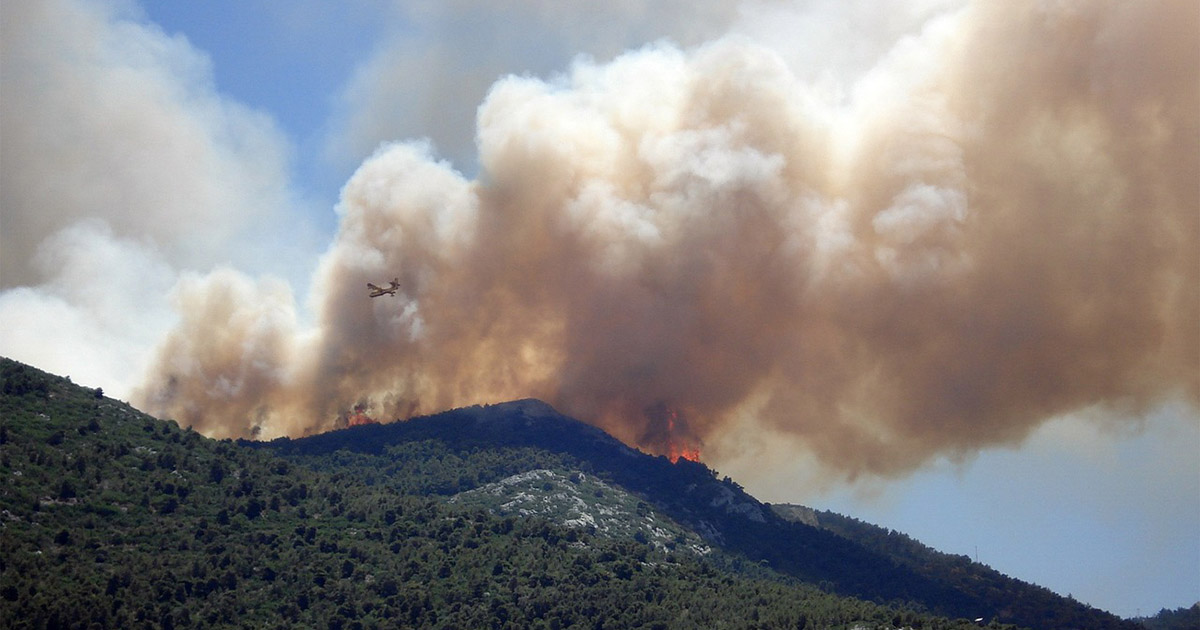
Challenges and Opportunities for Community Engaged Research Revealed Through Program Evaluation
Community-engaged research (CEnR) is a strategic component of NIEHS- and other NIH-funded projects, including the NIEHS Environmental Health Sciences Core Centers.
Read Current Newsletter
Podcast: Environmental Health Chat Podcast Series

PFAS in Drinking Water: Responding to Community Concerns
In this episode, we'll hear how scientists responded to residents' concerns after PFAS was discovered in their drinking water.

Protecting Communities From Lead Exposure
In this episode we talk with Marilyn Howarth, M.D., who works with community partners to better understand the factors associated with lead exposure across Philadelphia. As part of a community project, she and the team created a map that combines socioeconomic, demographic, and soil lead data to show exposure risk across Philadelphia neighborhoods.
PEPH Resources
Healthy Families
A Story of Health - A Multi-Media E-Book
eBook grounds the science of health in stories of fictional people, their families, and communities to enable readers to explore the risk factors for disease as well as how to prevent disease and promote health and resilience.
Answers to our most frequently asked questions about asthma and allergies.
Childhood Leukemia and the Environment
The Western States PEHSU has an ongoing collaboration with the Center for Integrative Research on Childhood Leukemia and the Environment (CIRCLE) Community Outreach and Translation Core, working to educate clinicians and the public about environmental toxicants that increase the risk of childhood leukemia and other childhood diseases.
Healthy Spaces
Cleaning Up Take-home Lead Dust in Your Home and Car
The most effective method for removing lead dust combines vacuuming and wet wiping.
Environmental Health Infographics
Popular graphics, thematic graphics and graphics related to research studies and projects available from the Environmental Health Centers based at USC.
Carbon monoxide (CO) is a gas with no odor, taste or smell. It can harm the health of anyone, even healthy people, by traveling through the bloodstream to the heart, lungs, and brain.
Healthy Communities
An online resource center about PFAS contaminants in drinking waterâÃÂÃÂhelping communities understand their exposures and take action to protect their health.
Best Practices: Sharing Environmental Health Research
This document synthesizes existing science communication literature with insight from decision maker interviews to offer guidelines for translating and sharing environmental health research.
Temperatures are rising across the globe. As a result, extreme heat events are more common and expected to increase over the next century. Extreme heat is a period of high heat and humidity with temperatures above 90°F for at least two days.
Webinars
PEPH established its webinar series to promote interactions among grantees, increase awareness of common issues and approaches, and facilitate consideration of emerging concerns. While the primary audience is grantees within the PEPH network, anyone interested in environmental public health is welcome to participate.
PEPH Webinars
Coming Soon

Previous Webinars
Environmental Public Health Mobile Apps âÃÂàSession Two
Environmental Public Health Mobile Apps âÃÂàSession One
Grantee Highlights

Kathleen Vandiver, Ph.D.
Building Environmental Health Literacy Across Generations and Communities
Prior to joining the Massachusetts Institute of Technology (MIT) in 2005 as a community engagement and education specialist, Kathleen Vandiver, Ph.D., taught middle school science for 16 years. During that time in the classroom, she relished devising experiments and hands-on activities for her students to help them recognize and experience key scientific concepts.
Previous Grantees

Max Aung, Ph.D.

Jennifer Richmond-Bryant, Ph.D.

Kelly Pennell, Ph.D.
Denae King, Ph.D.
Upcoming Events
USA Exposome Symposium: ChildrenâÃÂÃÂs Health, Environmental Justice and the Exposome
Jan
22 - 24
2024
Registration is now open
Details
Location: Nashville, Tennessee Start: Jan 22, 2024 1:00 p.m. End: Jan 24, 2024 12:00 p.m. Host: Icahn School of Medicine at Mount Sinai
Description
The Icahn School of Medicine at Mount Sinai Institute for Exposomic Research and Meharry Medical College are hosting a symposium on the intersection of the exposome, childrenâÃÂÃÂs health, and environmental justice. The symposium will bring together academic, government, and community partners to share research findings, discuss the use of computational analytics, artificial intelligence, and machine learning in analyzing large data sets, and discuss translational interventions and policies to reduce the effects of environmental injustice on child health.
Jan
25
2024
International Society of Exposure Science Panel Discussion Webinar: Exposure Science in Latin America
Feb
20 - 22
2024
PEPH 2024 | Climate Change and Environmental Justice: Engaging Diverse Teams
Funding Opportunities
Application Due Date Jan 05 2024
PHS 2023-2 Omnibus Solicitation of the NIH and CDC for Small Business Innovation Research Grant Applications (Parent SBIR [R43/R44] Clinical Trial Required)
Invites eligible United States small business concerns to submit Small Business Innovation Research (SBIR) Phase I, Phase II, Direct to Phase II (NIH only), Fast-Track (NIH only), and Phase IIB (NIH only) grant applications. The PHS 2023 -2 SBIR/STTR Program Descriptions and Research Topics for NIH, CDC, and FDA represent scientific program areas that may be of interest to applicant small businesses in the development of projects that have potential for commercialization. Small business concerns that have the research capabilities and technological expertise to contribute to the research and development mission(s) of the NIH and CDC awarding components identified in this funding opportunity are encouraged to submit SBIR grant applications in these areas. A related SBIR funding opportunity is available without a clinical trial requirement: PHS 2023-2 Omnibus Solicitation of the NIH, CDC and FDA for Small Business Innovation Research Grant Applications (Parent SBIR [R43/R44] Clinical Trial Not Allowed) . Related funding opportunities are available for small business applicants interested in submitting small business technology transfer (STTR) applications: PHS 2023-2 Omnibus Solicitation of the NIH for Small Business Technology Transfer Grant Applications (Parent STTR [R41/R42] Clinical Trial Not Allowed) and PHS 2023-2 Omnibus Solicitation of the NIH for Small Business Technology Transfer Grant Applications (Parent STTR [R41/R42] Clinical Trial Required) .
Deadlines: January 5, 2024; April 5, 2024
Application Due Date Jan 05 2024
SBIR/STTR Commercialization Readiness Pilot (CRP) Program Technical Assistance and Late Stage Development (SB1, Clinical Trial Not Allowed)
Encourages applications from small business concerns to the newly re-authorized Commercialization Readiness Pilot (CRP) program. The funding opportunity aims to facilitate the transition of previously or currently funded Small Business Innovation Research (SBIR) and Small Business Technology Transfer (STTR) Phase II and Phase IIB projects to the commercialization stage by providing additional support for technical assistance and later stage research and development not typically supported through Phase II or Phase IIB grants or contracts. This may include independent replication of key studies, Investigational New Drug-enabling studies, clinical studies, manufacturing costs, regulatory assistance, or a combination of services. Although a significant amount of the work in a CRP award may be subcontracted to other institutions, the small business concern is expected to maintain oversight and management of research and development throughout the award.
Deadlines: January 5, 2024; April 5, 2024
Application Due Date Jan 30 2024
HHS Environmental Justice Community Innovator Challenge
The Office of the Assistant Secretary for Health and the Office of Minority Health are seeking community-led strategies and tools to address health disparities in communities disproportionately impacted by environmental risks and hazards including those related to climate change, and the cumulative impacts of other stressors. This Challenge seeks to support to community-based and Tribal organizations in areas including, but not limited to: development or implementation community-driven strategies to address health disparities; effective partnerships between community-based or Tribal organizations and other civil organizations, such as faith-based, healthcare and public health and educational organizations, to address environmental and climate change-related hazards and support community resilience; and innovative approaches to building capacity in community-based or Tribal organizations on project planning, needs assessment, budgeting, engagement with community members, and grant application writing, to address environmental and climate change-related hazards as drivers of health disparities. The competition has two phases. All eligible submissions will be evaluated, and separate prizes will be awarded for each of the two phases. The first phase is currently open for submissions.
Deadline: January 30, 2024