 An official website of the United States government




An international investigation into outcomes of severe acute malnutrition (SAM) in children
Approximately two million children worldwide under the age of five become severely malnourished (SAM) every year, an estimated 20-30% of whom do not survive. Classically, severe acute malnutrition can be classified as either marasmus or the systemically deleterious kwashiorkor. Despite decades of study, the reason some children develop kwashiorkor and others marasmus remains unclear, as there are no consistently reproducible differences in environment, infection status, or diet. KwashNet is undertaking the first human genetic studies designed to identify genetic loci that underlie the well-characterized inter-individual differences in the risk of developing kwashiorkor vs. marasmus. Identifying and validating these loci can provide putative therapeutic insights and shed light upon other disorders of nutritional stress, including overnutrition, cancer, and chronic illness.
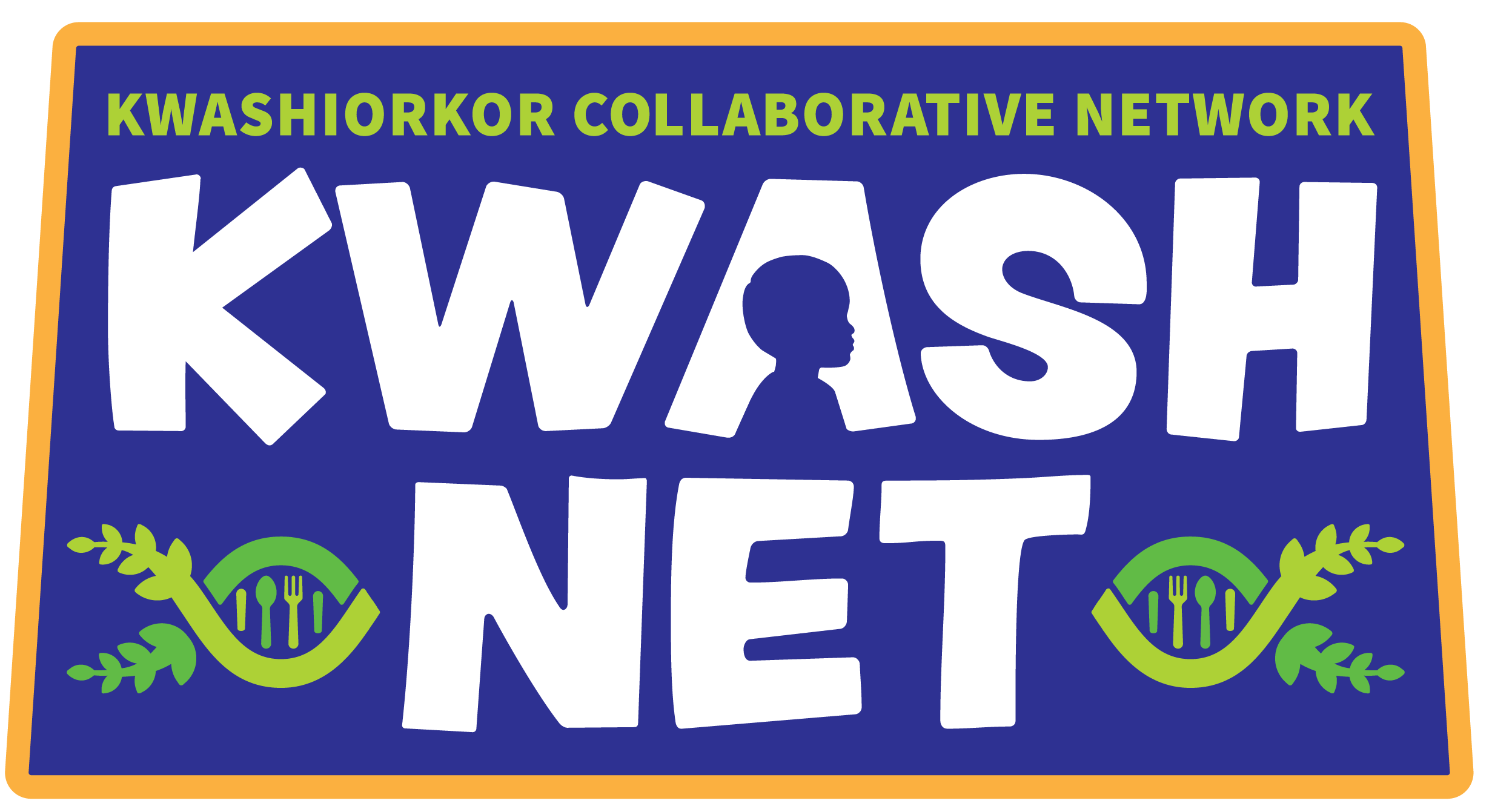
Our global collaborative network (“KwashNet”) currently includes researchers from eight sites across seven countries in Africa.
Iganga-Mayuge Health and Demographic Surveillance Site
Iganga and Mayuge Districts, Uganda/Kampala, Uganda
Mulago National Referral Hospital
Kampala, Uganda
University of Kinshasa Centre for Human Genetics
Kinshasa, Democratic Republic of Congo
Botswana-Baylor Children’s Clinical Centre of Excellence
Gaborone, Botswana
Haydom Lutheran Hospital
Haydom, Tanzania
Tropical Gastroenterology and Nutrition Group
Lusaka, Zambia
Zvitambo Institute for Maternal and Child Health Research
Harare, Zimbabwe
KEMRI-Wellcome Trust Research Programme
Kilifi, Kenya
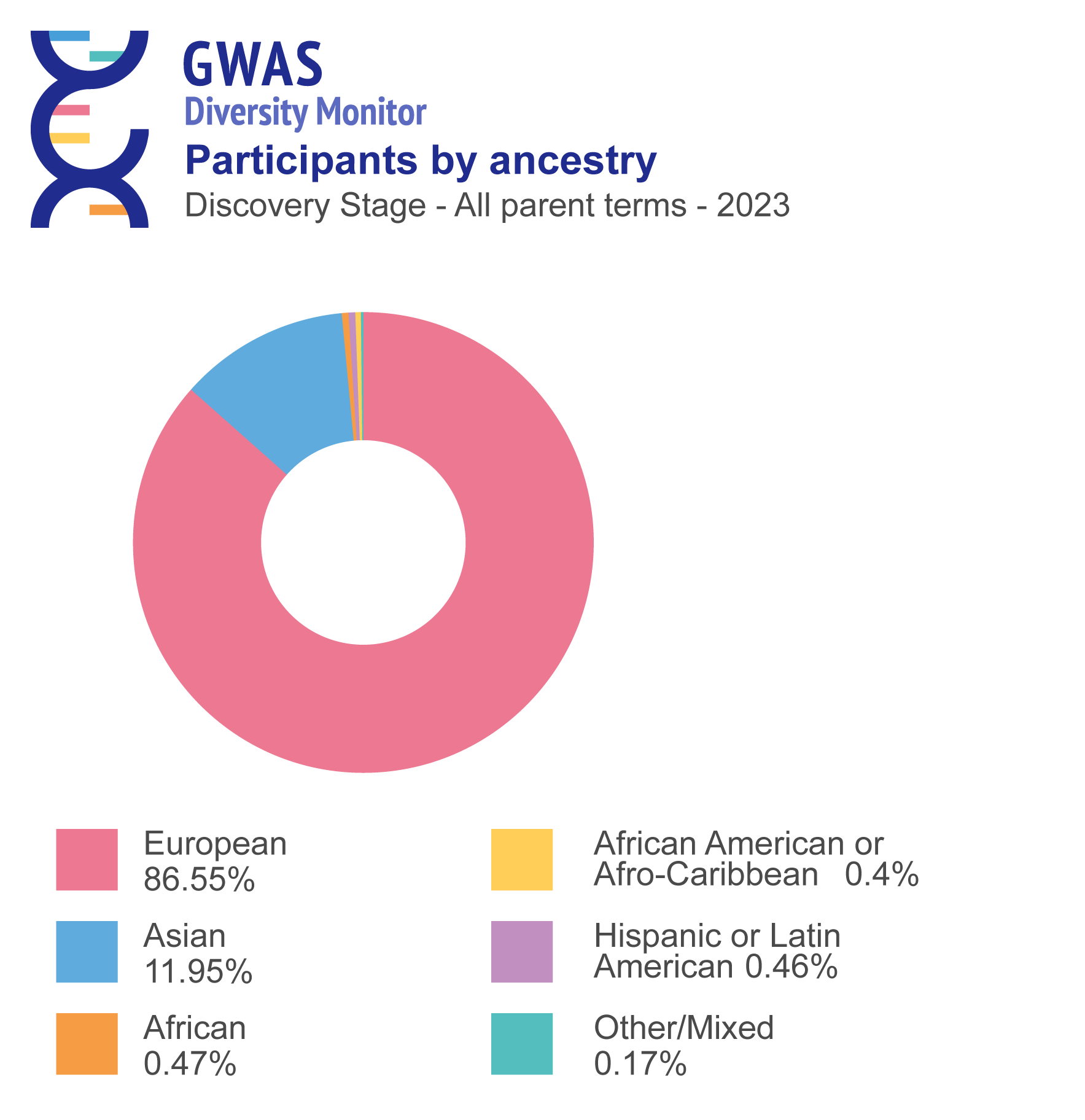
Mills, M.C. and Rahal, C., (2020). ‘The GWAS Diversity Monitor tracks diversity by disease in real time’. Nature Genetics, 52, 242-243. doi: 10.1038/s41588-020-0580-y
Project Goals
The primary goal of KwashNet is to elucidate why some children with SAM are more likely to develop kwashiorkor while most others develop marasmus. Developing a cohort of clinically and genetically well-phenotyped individuals is central to accomplishing this goal. This is facilitated by performing genome-wide genotyping and sequencing as well as collecting extensive medical information during treatment, discharge, and follow up of children with SAM. The extensive phenotypes and germline genomic data will also serve as a resource for answering additional research questions relevant to both these populations and to global nutritional and childhood health priorities, such as anthropometry, diabetes, and obesity.
Beyond the scope of understanding interindividual risk or susceptibility to kwashiorkor vs marasmus, another goal of KwashNet is to increase reference genome representation. Current reference genome databases skew heavily to represent individuals of European ancestry (GWAS Diversity Monitor 2023). This lack of diversity fails to capture novel genetic variants and unique patterns of admixture in African and other diverse ancestry populations who harbor the most genetic diversity. This can potentially lead to ambiguous genetic results in both research and clinical testing. Upon completion of this study, and consistent with the NHGRI 2020 Strategic Plan, de-identified genomic data representing ethnolinguistic groups across seven countries will be available to be incorporated as part of reference databases.
Using the tri-directional research engagement model (Billawala, Taiwo, and Hanchard 2022), KwashNet sites will engage with community advisory boards and study participants to elicit feedback throughout the study. KwashNet will build on the genomic infrastructure and resources created by H3Africa to further develop genetic research capacity across the continent.
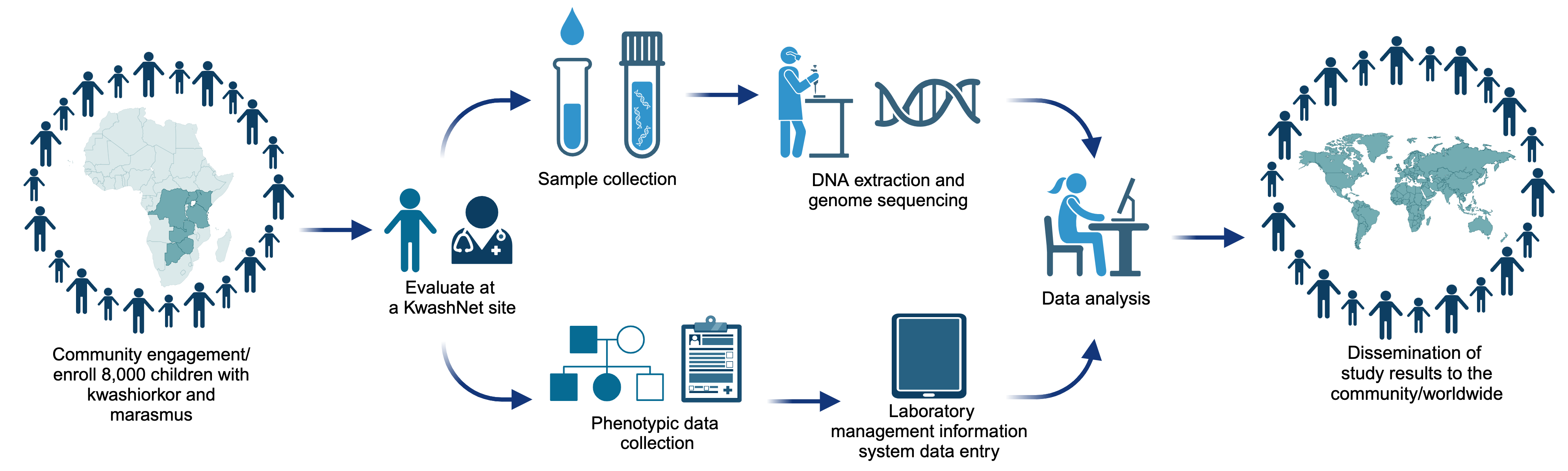
Current studies include a genome-wide association study of ~8,000 individuals. Each site will collect DNA samples and phenotype data using retrospective medical chart review or information available at time of treatment. Additional phenotypic data will be collected from prospectively enrolled participants at time of discharge and at 1-3 months after treatment. Information will be entered into an electronic data management system (PocketLIMS) optimized for data collection in both rural and urban settings. DNA will be sent for sequencing and genotyping, prior to collaborative analyses downstream. Each site will engage with local community advisory boards (CABs) to develop best practices for enrolling, engaging, and disseminating information to their communities in an ethical and culturally appropriate fashion.
Current Studies Annual Meetings
KwashNet meets in-person annually to develop guidelines, data collection tools, and network-wide standards as a group. Attendees at these meetings include gastroenterologists, immunologists, pediatricians, nurses, laboratory scientists, post-doctoral fellows, PhD students, genetic counselors, and bioethicists. Our inaugural meeting was in Gaborone, Botswana in 2023 and was hosted by Dr. Matshaba. This meeting served as the first time that representatives from each KwashNet site were together, allowing for collaboration, networking, and early study development. Our second meeting was in Entebbe, Uganda in 2024 and was hosted by Dr. Babirekere. At this meeting we built on the progress generated from our Botswana meeting in anticipation of pending participant enrollment and sample collection, including finalizing study recruitment and sample collection standards, beta testing of PocketLIMS, and engagement with local community advisory boards. Our next meeting is planned for Zambia in 2025.
Kwashiorkor Collaborative Network (KwashNet) Photo Gallery Contacts National Human Genome Research Institute KwashNet Kenya KwashNet Botswana KwashNet Uganda KwashNet Tanzania KwashNet Democratic Republic of Congo KwashNet Zambia KwashNet Zimbabwe Consultant Investigators
