 An official website of the United States government




Culturally Focused Wellness Intervention
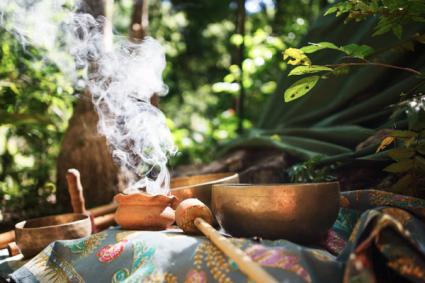
A culturally focused wellness intervention was developed to promote health using social support and discussion regarding cultural and historic issues. A cognitive-behavioral skills building (CBSB) component was added to the health promotion intervention, and its impact on reduction of alcohol consumption and depression was evaluated among Southwestern American Indian (AI) women. Participants were randomly assigned to receive a 10-session culturally focused health promotion intervention alone vs. the health promotion intervention plus the CBSB intervention, which included role-play to practice skills. There was no formal control group. Information was collected from each participant at baseline and at the end of intervention delivery, then every 3 months through the end of the project (i.e., four to six follow-up interviews per participant).
Outcomes
Estimates of changes or differences in alcohol-related problems and the stability of those changes or differences.
Medium/Mixed Level of Change
Improvement in both groups with no additional benefit of skills building over culturally focused wellness intervention alone.
Of the 268 women recruited and randomized, 181 completed the 6-month follow-up. Participants in both groups reported decreased alcohol consumption, increased alcohol abstinence self-efficacy, decreased depression, and increased self-esteem from baseline to 6‑month follow-up. There was no significant difference between groups. The health promotion wellness-oriented intervention was associated with beneficial effects. The data suggest that role-playing and practicing coping skills may not provide additional benefit. The research design did not include a no-intervention control group; thus, improvements cannot be credited to the intervention.
Costs
Two domains estimating start-up and ongoing expenses.
| Start-Up Cost Medium | Ongoing Cost Medium |
Start-up and ongoing costs would be moderate.
Costs included renting space in the community, training costs and salaries for staff to deliver intervention, costs associated with Tribal/Community Advisory board input, materials, transportation, food, and childcare.
Cultural Engagement
Two indicators of cultural and Tribal/community contributions.
| Cultural Inclusion Medium | Tribal Inclusion High |
The community participated in creation and implementation of the culturally congruent curriculum.
Incorporation of Tribal history, culture, and spirituality was described as a major priority in the design of the wellness intervention. The CBSB portion included culturally appropriate and realistic methods of incorporating cognitive and behavioral skills. Both curricula were developed in a collaborative effort by a community advisory board consisting of Tribal members and staff who worked with the Tribal health department and the university research team, many of whom also were American Indians. Tribal Elders were invited to attend several curriculum development meetings to highlight important historical and cultural issues that should be included.
ParticipantsDemographic description of the people who participated in the research study. Young Adult, Adult; Native; Female | SettingPlace(s) in which this intervention was conducted. Reservation | DeliveryMethod through which the intervention was delivered to participants in the study. Medium Group, Face-to-Face |
Indigenous women in a small American Indian community.
Eligible women were Tribal members, ages 18 to 50 years, residing in a small Southwest American Indian community. Mean age of participants was 31 years, and 94% self-identified as American Indian. The intervention was delivered in a project office located in a residential neighborhood on the reservation.
Staffing Needs
Credentials and/or background of personnel who delivered the intervention.
Community Member
Trained community members delivered the intervention.
Female American Indian community members with previous outreach or health education experience were hired and trained as outreach workers and program facilitators. Local American Indian Elders contributed to curriculum development and presentation.
Research Design
Methods employed to gather research data.
Quasi experimental design
Developmental stage of research
Stage of development of the evidence supporting this intervention.
Early Stage
The research is limited by the inability to attribute beneficial effects to either intervention due to lack of control group or high loss to follow-up.
Findings suggest that the health promotion curriculum, with or without the CBSB component, may be effective in decreasing alcohol consumption and increasing alcohol abstinence self-efficacy. The small, stable community with frequent contact among the participants outside the confines of the study may have exposed the non-CBSB group to CBSB skills. Results are encouraging, but the lack of control group and high loss to follow-up make it impossible to attribute the results to the interventions.
Potential
Narrative offered by expert reviewers providing overall comments or evaluations about the intervention.
This strength-based, culturally congruent, comprehensive approach to health promotion may be adapted for other Tribal communities.
Larger trials employing more rigorous study designs are needed to determine effectiveness.
References
Primary
Gray N, Mays MZ, Wolf D, Jirsak J. Culturally focused wellness intervention for American Indian women of a small southwest community: Associations with alcohol use, abstinence self-efficacy, symptoms of depression, and self-esteem. Am J Health Promot. 2010;25(2):e1-e10. https://pubmed.ncbi.nlm.nih.gov/21066905 . https://doi.org/10.4278/ajhp.080923-quan-209 .
Recommended Reading
Gray N, Wolf D, Mays M, et al. A culturally based wellness and creative expression model for Native American communities. J Equity Health . 2008;1(1):52-60. http://www.jehonline.org/vol_1_1/JEH-Gray_5.pdf.
See references for all interventions
< Back to all interventions for Prevention of Alcohol Misuse