 An official website of the United States government




Adding motivational interviewing and cultural practices to attendance at community wellness gatherings for urban Native adolescents.
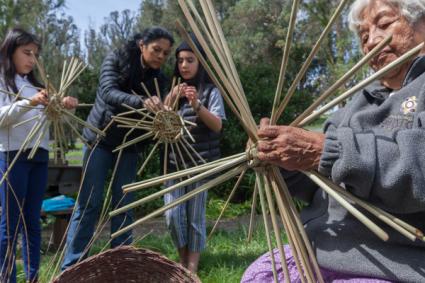
Motivational Interviewing and Culture for Urban Native American Youth (MICUNAY) is a culturally centered intervention addressing alcohol and other drug use among Native adolescents. It combines motivational interviewing (MI) and “pan-Indian” cultural practice components to deliver information regarding alcohol and other drug use and hands-on learning of traditional practices. Adolescents completed a baseline survey, were assigned by block randomization to at least one monthly community wellness group alone or in combination with the MICUNAY intervention, and were followed up 3 and 6 months later.
Outcomes
Estimates of changes or differences in alcohol-related problems and the stability of those changes or differences.
No Change
Exposure to cultural activities may protect against increased substance use, but MICUNAY provided no additional benefit.
Both substance use and intent to use remained relatively stable over the study period, and there was no significant difference between the two groups at follow-up.
Costs
Two domains estimating start-up and ongoing expenses.
| Start-Up Cost Medium | Ongoing Cost Medium |
Medium costs for personnel to deliver intervention, supplies, and facilities.
Costs include hiring and training MICUNAY facilitators, compensation to Elders for facilitating community wellness group events, food and facility costs, supplies for traditional cultural activities.
Cultural Engagement
Two indicators of cultural and Tribal/community contributions.
| Cultural Inclusion High | Tribal Inclusion High |
Culture is central to this intervention .
MICUNAY was developed with extensive input from the Native American community. Cultural elements focused on a “Pan-Indian” identity while empowering youth to learn about their Tribe-specific roots.
ParticipantsDemographic description of the people who participated in the research study. Adolescent; Native; Female, Male | SettingPlace(s) in which this intervention was conducted. Community Center, Urban | DeliveryMethod through which the intervention was delivered to participants in the study. Small Group, Medium Group, Face-to-Face |
Urban dwelling adolescents participated in community-based settings.
A total of 185 adolescents (ages 14–18 years; 81% Native; 51% female) participated in urban community settings.
Staffing Needs
Credentials and/or background of personnel who delivered the intervention.
Community Member
The community wellness groups were facilitated by Elders; the MICUNAY sessions were conducted by community members.
Community Elders facilitated the community wellness group events. Native community members, ranging in education from high school graduate to master’s degree, conducted MICUNAY workshops after receiving training in MI.
Research Design
Methods employed to gather research data.
Randomized controlled experimental design
Developmental stage of research
Stage of development of the evidence supporting this intervention.
Mid Stage
Acceptability of MICUNAY was demonstrated, but clear efficacy above the community wellness groups was not.
Rates of alcohol and other drug use did not increase with time as may be typical among youth of this age. The study was limited by the lack of a no-treatment control group, the possible effect of differentially recruiting youth who were already engaged in cultural activities, and considerable loss to follow-up.
Potential
Narrative offered by expert reviewers providing overall comments or evaluations about the intervention.
MICUNAY may be protective against increasing substance use.
MICUNAY is highly transportable, acceptable to youth, brief, and relatively low-cost to implement. Results suggest that connecting urban AI/AN adolescents to culturally centered activities and resources may be protective.
References
Primary
D’Amico EJ, Dickerson DL, Brown RA, Johnson CL, Klein DJ, Agniel D. Motivational interviewing and culture for urban Native American youth (MICUNAY): A randomized controlled trial. J Subst Abuse Treat. 2020;111:86-99. https://pubmed.ncbi.nlm.nih.gov/32087841 . https://doi.org/10.1016/j.jsat.2019.12.011 .
Associated
Dickerson DL, Brown RA, Johnson CL, Schweigman K, D'Amico EJ. Integrating motivational interviewing and traditional practices to address alcohol and drug use among urban American Indian/Alaska Native youth. J Subst Abuse Treat. 2016;65:26-35. https://pubmed.ncbi.nlm.nih.gov/26306776. https://doi.org/10.1016/j.jsat.2015.06.023 .
Recommended Reading
Brown RA, Dickerson DL, D'Amico E J. Cultural identity among urban American Indian/Alaska Native youth: Implications for alcohol and drug use. Prev Sci. 2016;17(7):852-861. https://www.ncbi.nlm.nih.gov/pmc/articles/PMC5030149 . https://doi.org/10.1007/s11121-016-0680-1 .
See references for all interventions
< Back to all interventions for Prevention of Alcohol Misuse