 An official website of the United States government




A culturally adapted family intervention was contrasted to a culturally enriched adolescent inpatient treatment program
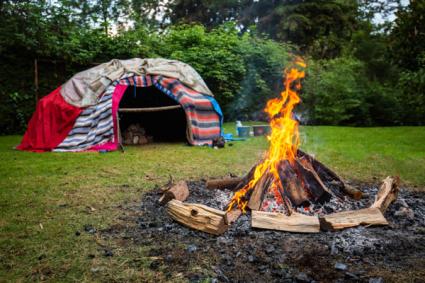
The Shadow Project aimed to use an enhanced family intervention focusing on relationship building, positive reinforcement, limit setting, monitoring, problem-solving, and communication, delivered at an inpatient alcohol and drug treatment program to reduce adolescent alcohol and other drug use. A culturally adapted version of an evidence-based family management intervention, the Family Checkup, was added to a 7- to 8-week culturally rich treatment as usual. Treatment as usual provided a wide range of inpatient treatment services (i.e., individual and group therapy, assessment, referral, etc.) supplemented by access to AI/AN cultural and traditional activities (e.g., sweat lodges, drumming, singing, Tribal history). Families receiving the Family Checkup received an assessment, including observation of engaging in culturally adapted family problem-solving, and they were provided with feedback by a family therapist. A family plan was developed using motivational interviewing to enhance family and community support for youth abstinence upon coming home.
Outcomes
Estimates of changes or differences in alcohol-related problems and the stability of those changes or differences.
No Change
Participants in both the culturally enriched treatment as usual and the culturally enriched and family-enhanced condition had high levels of abstinence from alcohol and other drugs.
The primary outcomes—the percentage of days abstinent from alcohol, marijuana, and other drugs—were measured over 12 months. Although both groups tended to have relatively high levels of percentage of days abstinent from alcohol and other substances, there were no significant differences between treatment groups. Subsequent analysis of substance use (including alcohol and drug use) among the 57 participants retained from both treatment conditions found that only 23% relapsed or deteriorated and 77% showed low level of substance use at the 1-year follow-up.
Costs
Two domains estimating start-up and ongoing expenses.
| Start-Up Cost High | Ongoing Cost High |
Costs to enhance regular inpatient services and to add family interventions would be high.
Costs to start up and maintain this intervention are estimated to be high. There would be costs to enrich the treatment as usual and to support the adaptation and implementation of Family Checkup. The aftercare component requires community workers who can follow up with youth after they leave the inpatient program. Moreover, family therapists likely will be an expense, depending on required credentials.
Cultural Engagement
Two indicators of cultural and Tribal/community contributions.
| Cultural Inclusion Medium | Tribal Inclusion None Reported |
All participants had access to culturally enriched treatment as usual to which the family enhancement intervention added more cultural components.
The treatment as usual services provided at the regional residential setting employed many cultural elements. Additional cultural elements were part of the adapted Family Checkup, including a “welcome home” ceremony, storytelling, and other components. Description of these adaptations or how they were implemented was not clear. Tribal involvement was not described.
ParticipantsDemographic description of the people who participated in the research study. Young Adult, Adult; Native; Female, Male | SettingPlace(s) in which this intervention was conducted. Home, Clinical/Healthcare, Reservation | DeliveryMethod through which the intervention was delivered to participants in the study. Individual, Small Group, Multi-level, Face-to-Face |
American Indian youth who resided on or near reservations who were entering an inpatient treatment program in the Pacific Northwest.
Participants were American Indian youth (ages 12 to 18 years, mean age 16 years) entering a regional alcohol and drug inpatient treatment program in the Pacific Northwest. The program accepted youth from the western United States, and 28 different Tribes were represented in the study. Seventy percent (70%) lived on or near a reservation, and 45% of the youth were female.
Staffing Needs
Credentials and/or background of personnel who delivered the intervention.
Not Specified
The staffing of treatment as usual, family therapy services, or community aftercare workers was not described.
Specific credentials of all the service providers, including treatment as usual or aftercare providers, were not described in the study. The credentials or background of family therapists who worked with the family in the culturally enhanced Family Checkup condition also were not described.
Research Design
Methods employed to gather research data.
Quasi experimental design
Developmental stage of research
Stage of development of the evidence supporting this intervention.
Early Stage
Early stage pilot research with small sample size.
The present study is an early stage, suggestive pilot work with selective enrollment from among eligible families (66 families or 63%) and only 57 families providing follow up data. There was no random assignment to the treatment as usual and Family enhanced conditions; both groups received the usual services which included access to traditional cultural components. The effect of the significant incorporation of cultural elements to the treatment as usual might have been difficult to distinguish from the small size number of families receiving the family based intervention.
Potential
Narrative offered by expert reviewers providing overall comments or evaluations about the intervention.
This study demonstrated the feasibility of incorporating cultural elements into residential treatment programs for adolescents.
This was a pilot study of a program that intended to add an enhanced family component to a culturally enriched residential treatment as usual. Both seemed effective and feasible; once families consented to participate, follow up was good. It is difficult to determine the transportability and feasibility of either intervention to other regional residential treatment programs for adolescents. Perhaps the inclusion of cultural elements might contribute to greater acceptability, though that was not assessed in the current study.
References
Primary
Boyd-Ball AJ. A culturally responsive, family-enhanced intervention model. Alcohol Clin Exp Res . 2003;27(8):1356-1360. https://pubmed.ncbi.nlm.nih.gov/12966339 . https://doi.org/10.1097/01.alc.0000080166.14054.7c .
Associated
Boyd-Ball AJ, Dishion TJ, Myers MW, Light J. Predicting American Indian adolescent substance use trajectories following inpatient treatment. J Ethn Subst Abuse . 2011;10(3):181-201. https://pubmed.ncbi.nlm.nih.gov/21888498 . https://doi.org/10.1080/15332640.2011.600189 .
Recommended Reading
Boyd-Ball AJ, Dishion TJ. Family-centered treatment for American Indian adolescent substance abuse: Toward a culturally and historically informed strategy. In: Liddle HA, Rowe CL, eds. Adolescent Substance Abuse: Research and Clinical Advances . Cambridge, UK: Cambridge University Press; 2006:423-448. https://doi.org/10.1017/CBO9780511543968.021 .
See references for all interventions
< Back to all interventions for Treatment of Alcohol Use Disorder